


传奇故事
Central China province targets $12b trade with Africa by 2028, focusing on mining and modern agriculture_我的网站

A |
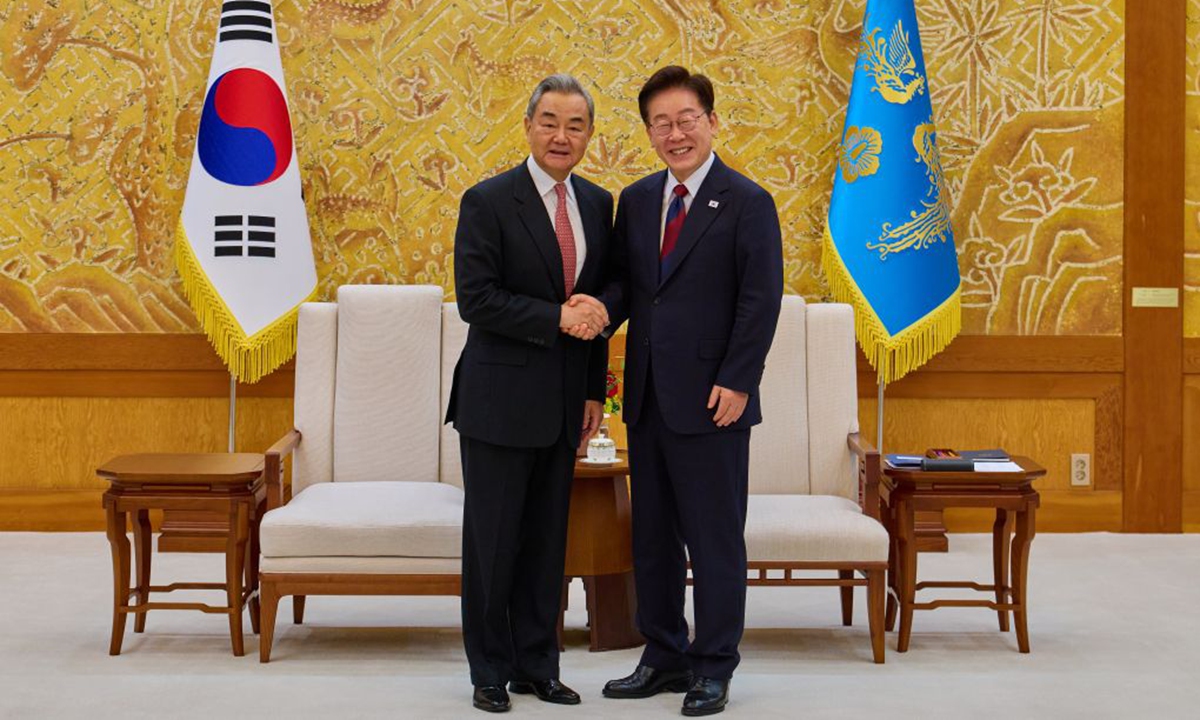
Chinese Foreign Minister Wang Yi, who kicked off his visit to South Korea on Wednesday, held talks with President Lee Jae-myung on Thursday, according to the Chinese Foreign Ministry.
The visit by Wang Yi is his first in five years since he last came to Seoul for bilateral talks with his South Korean counterpart in September 2021, according to South Korean media outlet Yonhap News Agency.
During the meeting, the South Korean president said that South Korea and China should become mutually dependent and mutually beneficial partners with complementary strengths, adding that the two countries need each other in areas such as economy, trade and security, according to the Xinhua News Agency.
Wang Yi, also a member of the Political Bureau of the Communist Party of China Central Committee, said the comprehensive restoration of China-South Korea relations and positive progress made since the beginning of this year have demonstrated that a rational, pragmatic and positive policy toward China fully serves South Korea's interests and is in keeping with the trend of the times.
During the visit, Wang also met with South Korean Foreign Minister Cho Hyun and Wi Sung-lac, South Korea's top presidential national security advisor.
Chinese analysts regard the latest senior-level engagements as "building on the past and paving the way for the future." Coming at a critical juncture amid shifting regional dynamics, it serves as a tangible follow-up to the two heads of state's efforts to restore bilateral ties and reflects the growing maturity of relations, they said.
Opportunity for greater progress
During the meeting, Lee told Wang Yi that he was glad to see China-South Korea relations improving and developing rapidly, with strong growth momentum in economic and trade cooperation. While highlighting that people-to-people exchanges between the two countries are expected to exceed 10 million this year, Lee said that South Korean public perceptions of China are improving and there are growing expectations for strengthening comprehensive cooperation with China, per Xinhua.
Lee added that he looks forward to visiting China's Shenzhen City in November for the 2026 APEC Economic Leaders' Meeting, calling it an important opportunity to work with China to advance the South Korea-China strategic cooperative partnership to a new level.
In his turn, the Chinese top diplomat told President Lee that he hopes South Korea will firmly pursue a friendly policy toward China and take the 35th anniversary of the establishment of diplomatic relations between the two countries next year as an opportunity to make greater progress in the China-South Korea strategic cooperative partnership.
Wang also noted that China is ready to share development opportunities with all countries, especially its neighbors. Amid growing global economic fragmentation and rising trade protectionism, Wang pointed out that China and South Korea should set an example by concluding the second phase of Free Trade Agreement (FTA) negotiations at an early date to promote regional economic integration and universally beneficial and inclusive economic globalization.
Since the two countries established diplomatic relations in 1992, their bilateral trade volume has increased more than 60 times. China has remained the South Korea's largest trading partner for 21 consecutive years, according to the Xinhua.
According to a Wednesday report by South Korean newspaper The Korea Herald, Seoul has also described Wang Yi's trip as an opportunity to build on the recent improvement in bilateral relations and prepare for further high-level exchanges.
Wang Junsheng, a researcher at the Chinese Academy of Social Sciences' National Institute of International Strategy, told the Global Times that this visit is anchored in key consensus forged during the reciprocal state visits by the two countries' heads of state. Wang Yi's trip can be seen as translating leaders' consensus into concrete action, and deepen exchanges and cooperation at all levels, he noted.
He also viewed the visit as encompassing coordination with Seoul on future preparations for November's APEC meeting, as Lee is expected to attend.
After previous setbacks, China-South Korea relations have recovered across political, economic, diplomatic and security spheres following the leaders' meetings, Yang Xiyu, a senior research fellow at the China Institute of International Studies, told the Global Times on Thursday.
"The highlight of Wang Yi's visit this time could be summarized as steady progress in the maturity of China-South Korea relations, laying firmer ground for expanded cooperation and difference management ahead," Yang added.
Hand in hand
On the international and regional front, Lee said that amid the current international situation, stronger strategic cooperation between South Korea and China serves the fundamental interests of both countries and is important for regional peace and stability, per Xinhua.
Wang Yi told Lee that as an important force for maintaining world peace, China consistently advocates the political settlement of international and regional conflicts through dialogue, adding that China is also a major stabilizing force, providing valuable certainty for the world.
During the Thursday meeting with Wi Sung-lac, South Korea's top presidential national security advisor, Wang Yi also expressed hope that South Korea will pursue genuine strategic autonomy, refrain from bloc confrontation or taking sides, and develop its relations with China, the US and other major countries in a mutually compatible manner, per Xinhua.
Wang Yi stressed that it is necessary to remain highly vigilant against the rhetoric and actions of Japan's right-wing forces that seek to turn back the wheel of history, and that the resurgence of Japanese militarism must never be allowed.
The Chinese top diplomat called on all parties to do more to facilitate the resumption of dialogue and restoration of mutual trust, expressing hopes that the Korean Peninsula will move toward peaceful coexistence between South Korea and the DPRK, ultimately achieving lasting peace and stability on the Korean Peninsula, Xinhua reported.
Yang told the Global Times that China is entering a new stage of development, while South Korea in effect stands at a crossroads amid shifts on regional security. For both countries, deepening cooperation is therefore of great significance, and the two sides will need to demonstrate greater political sincerity to expand cooperation and manage differences.
As long as the two sides uphold the vision of a shared future and maintain their independence, China-South Korean relations at this historic juncture can embark on a more solid, fruitful development path that benefits both nations, Yang continued.
He added that stable China-South Korea relations can reduce the risk of confrontation among Northeast Asian countries, build a solid regional cooperation framework, as well as serve as a model in the region.
Looking at the broader international landscape, conflicts persist in the Middle East and elsewhere, while protectionism and unilateralism are on the rise, disrupting and even severing global supply chains. Against this backdrop, China-South Korea cooperation is vital not only to maintaining stable regional supply chains but also to supporting stability at the global level, Wang Junsheng said.
Progress in China-South Korea cooperation will generate multiplier effects benefiting both countries and the wider region, while injecting positive momentum into the global economy amid rising protectionism, Yang echoed.
On the first day of his trip on Wednesday, Wang Yi met with Cho Hyun, who said in an X post on Thursday that they walked together along the Dasan Seongguwak-gil trail in Namsan and continued their conversation from yesterday.
"Despite the lingering late-summer heat, I hope walking along the trail — where the historical fortress wall, Namsan's lush forest, and Seoul's cityscape blend seamlessly —offered Minister Wang, an avid hiker, a memorable experience. For me, it was indeed a meaningful time to deepen our friendship too," he wrote.
Embracing China means embracing the future, and going hand in hand with China means going hand in hand with opportunities, Wang Yi said during the meeting with Lee.
。
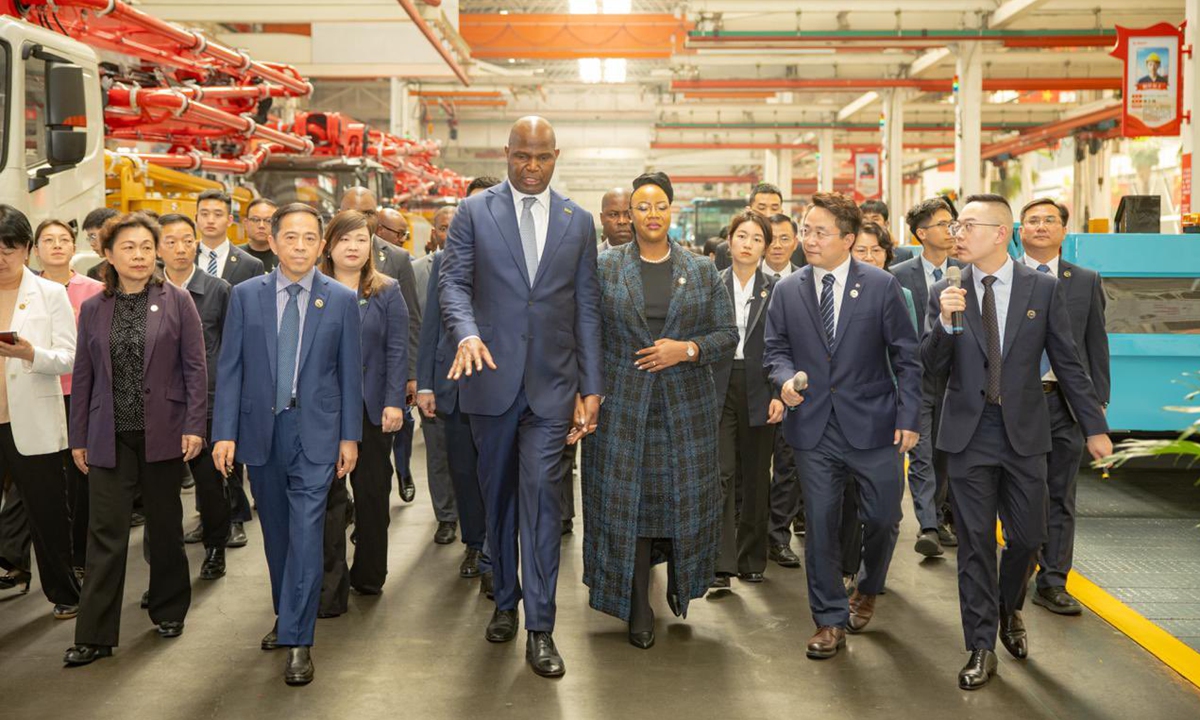
Central China's Hunan Province, a key locality in developing trade ties with African countries, aims to ramp up its foreign trade with Africa to 80 billion yuan ($11.86 billion) by 2028, according to a three-year action plan posted on the provincial government's website on Sunday.
The action plan focuses on 12 key African countries, aiming to build about 10 landmark projects involving production capacity cooperation and create one or two pilot projects under the "Two Countries, Twin Parks" model. The plan also aims to establish a service system for economic and trade cooperation with Africa.
The action plan highlights six of the province's competitive industries - mining, automobiles and parts, construction machinery, medical devices, modern agriculture, and green energy - and specifies differentiated and industry-specific development paths to form a full-chain and actionable road map.
The road map is one of the seven major measures outlined by Hunan to further improve trade and economic cooperation with African countries. The move is also aimed at tapping into a national policy that took effect on May 1, which expanded zero-tariff treatment to cover 53 African countries that have diplomatic relations with China.
In 2025, Hunan's trade with African countries totaled 58 billion yuan, ranking first for the seventh consecutive year among China's central and western provinces.
A Chinese analyst said on Sunday that as a locality and free trade zone that pioneers in China's trade and economic cooperation with African countries, Hunan enjoys a high level of industrial complementarity with African trading partners. Deepened cooperation between China and Africa will have particular significance amid the global headwinds of protectionism, said the analyst.
"The province's leading construction machinery sector could fit African countries' need to upgrade their raw material trade greatly and boost local industrialization. There is a perfect match of advanced Chinese production capacity with local development needs by these countries seeking to diversify their exports category," Song Wei, a professor at the School of International Relations and Diplomacy at Beijing Foreign Studies University, told the Global Times on Sunday.
Hunan has in recent years beefed up exchange and training programs for African experts, and emerging sectors such as agricultural products processing will serve as the new growth drivers of the province's cooperation with trading partners on that continent, building on the new opportunities brought by China's opening-up and a notable rise in African agricultural exports to China, Song said.
In particular, the action plan calls for improving supporting facilities for mining projects in Africa, expanding the scale of resource shipments back to China, boosting exports of mining equipment, and gradually building mining testing laboratories and setting up an investment fund for exploration in Africa in the mining sector.
The province also looks to increase exports of knocked-down vehicle kits, explore ride-hailing markets in key African countries, and expand used car exports in the automotive and parts sector and speed up product market certification to promote exports of medical equipment and supplies through China-Africa friendship hospitals in the medical device sector.
In the construction machinery sector, the action plan calls for improving alignment with Chinese-invested major infrastructure and mining engineering projects in Africa, expanding exports of branded machinery, and promoting exports of remanufactured construction machinery.
For modern agriculture, the province will set up integrated centers in Africa for agricultural machinery production, sales, and services, simultaneously cultivate projects that integrate production and trade, and coordinate the expansion of exports of competitive products and imports of distinctive African agricultural products.
In the first seven months of 2026, China's total trade with Africa reached 1.66 trillion yuan, up 18.9 percent year-on-year, closely trailing the growth rate of ASEAN at 20 percent year-on-year and making it one of China's fastest-growing trade partners.
The value of exports to Africa grew by 20.4 percent while that of imports shot up by 16.4 percent.
。

B |
Current article:http://ekav4.suilaoheirenzhaizhaikang.sbs/j2r/rvs5.html
Published on:02:09:00